
“FOR ME, HE’S JUST AN OVERRAGED PLAYER!” » — The words of Sadio Mané, Senegalese captain, instantly exploded social networks and international sports media. Hours before the crucial match against France, Mané made these comments during a press conference, causing shock waves throughout the football world. Supporters were immediately divided, with some defending Mané and his outspokenness, others expressing indignation at the lack of respect towards Ousmane Dembélé, considered a star of the French team.
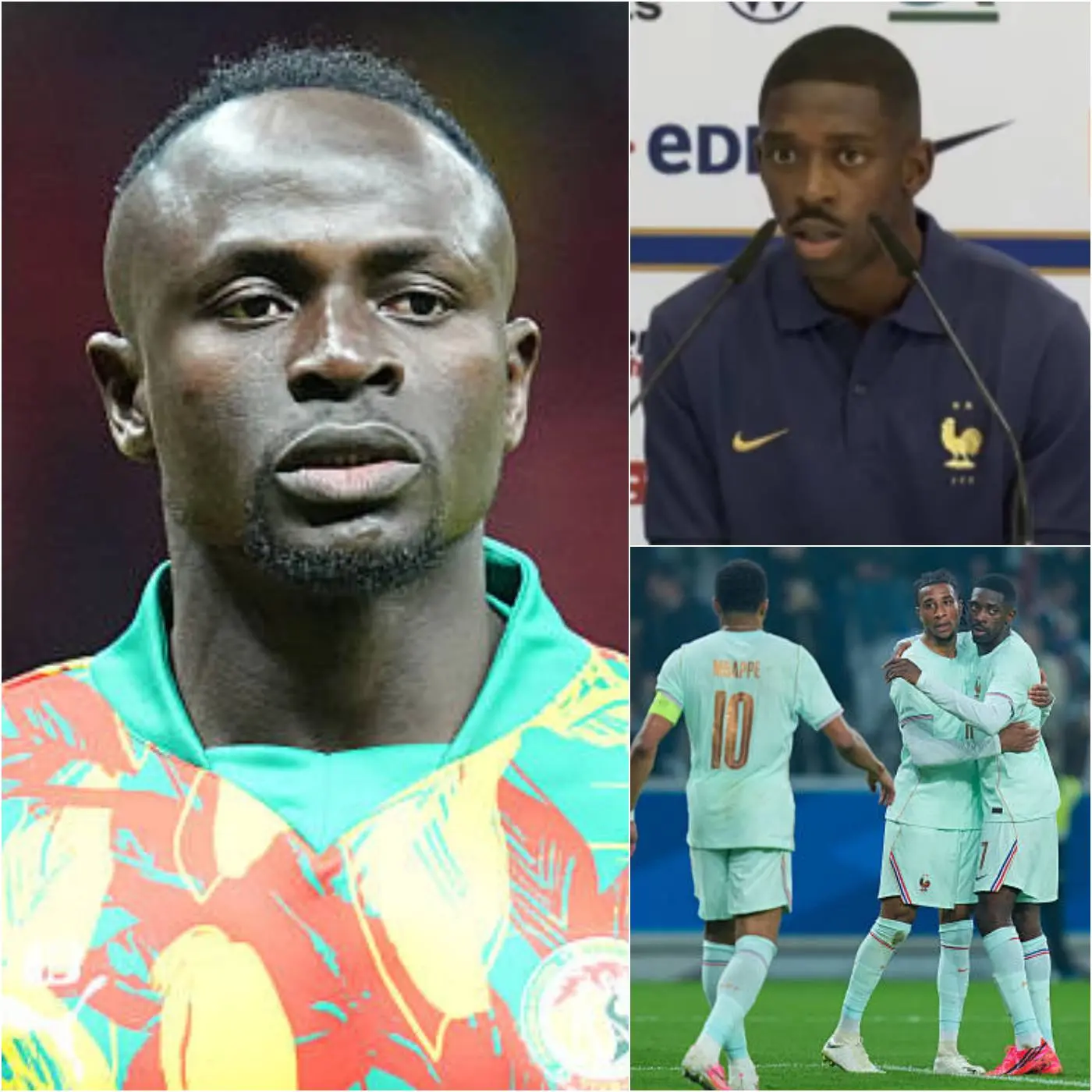
In the forums and on Twitter, the debates swelled, with comparisons of statistics, discussions about players’ legacies and accusations about attitude and professionalism. The hashtags devoted to this declaration quickly went viral, amplifying the media and sporting pressure before a match already under extreme tension.
Behind the cameras and the lights of the conferences, the French team’s locker room was in turmoil. Dembélé’s teammates, while trying to stay focused on the match against Senegal, could not ignore Mané’s words. Everyone analyzed the situation from the angle of strategy, psychology and the impact on collective motivation. The coaches called an emergency meeting to discuss how to prepare Dembélé and protect team cohesion.

Specific exercises were put in place to channel frustration and transform provocation into positive energy on the ground. The tension was palpable, with every gesture and word likely to set a precedent for the mood and atmosphere of the team heading into the clash.
Meanwhile, the reaction from Senegalese fans was just as intense. Many applauded Mané’s candor, seeing it as proof of his character and leadership on the pitch. Others, however, criticized what could appear to be a personal attack and a psychological strategy intended to destabilize France. Forums and live sports channels debated for hours the merits of the statement, questioning whether a captain should engage in this type of provocation before a crucial match.
The comparisons between Mané and Dembélé multiplied, analyzing past performances, club and national team statistics, and each word spoken by the commentators fueled the already intense fire.
When Dembélé finally responded, the situation shifted into another dramatic dimension. The French star, with remarkable coldness and self-control, chose not to react with anger, but with precise and impactful arguments on the pitch and in his post-training interviews. He recalled his performances, his commitment to France and his strategic contribution to the team, highlighting that superficial or emotional judgments did not reflect the reality of his impact.
His words, calculated and balanced, immediately caused the media, experts and fans to react, turning the narrative around and making France a morally victorious side even before kick-off.
Social media exploded again, but this time in favor of Dembélé. Montages, statistics and historical comparisons circulated, supporting his performances and highlighting the player’s undeniable talent. Influencers and sports journalists analyzed every word, every sentence, and even the tone of his voice, comparing his calm and control to Mané’s initial attack. Discussions quickly moved beyond a simple feud between two players, becoming a debate about leadership, media pressure and psychological resilience in top-level football.
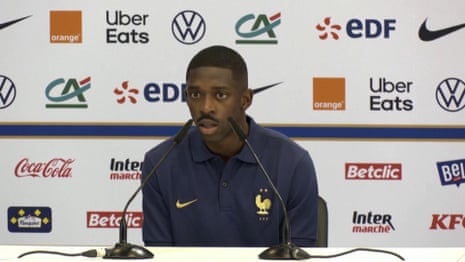
In the days that followed, the tension between the two stars became a central topic of sports broadcasts and international newspapers. Analysts have dissected statistics, previous matches and past interactions to understand the dynamic between Mané and Dembélé. Each training session of the French team was carefully observed, each tactical decision by Deschamps interpreted as an indirect message to respond to Mané’s provocation.
Team psychology and cohesion became priority topics of discussion, as performance on the pitch seemed to depend as much on the collective state of mind as on individual skills.
On match day, the atmosphere at the stadium was electrifying. French and Senegalese fans were aware of the story that was being played out alongside football: a battle of character and reputation between two of the continent’s biggest stars. The international media amplified every detail, analyzing Dembélé and Mané’s facial expressions during warm-ups, every interaction, every exchange of glances. The players themselves felt the tension, knowing that every action on the pitch would be scrutinized and interpreted as a commentary on the media duel that had been playing out behind the scenes.
When the kick-off was given, the dramatic intensity only increased. Dembélé, aware of the initial provocation, chose to respond with his performance, multiplying runs, passes and decisive actions, demonstrating his value without saying another word about Mané. Every touch of the ball, every dribble and every shot was seen as a silent but resounding response, transforming the match into a theater where talent and mentality clashed as much as the teams themselves.
The supporters, captivated by this additional dimension, felt a particular thrill, aware that they were witnessing a historic moment that was as psychological as it was sporting.
At the same time, Mané also showed intensity and leadership, seeking to inspire his teammates while indirectly responding to Dembélé’s performances. Every interception, every pass and every shot was scrutinized and compared by analysts and fans, who sought to determine who had the most impact. The duel between the two stars became a story in itself, with its twists and turns, its tensions and its reversals, captivating millions of spectators and fueling a rare suspense in a group match.
At halftime, the comments and analyzes continued to pour in. The journalists discussed how Dembélé had turned the situation in his favor thanks to his control and calm, and how Mané had tried to impose his authority while remaining focused on the collective goal. Online conversations continued to explode, turning every detail into a subject of debate, and highlighting how modern football combines performance, psychology and media influence.
Experts have highlighted that this type of duel, combining direct confrontation and emotional intelligence, has become an essential dimension of high-level football, where every word counts as much as every action on the pitch.

At the end of the match, Dembélé had not only responded to Mané but also asserted his place as leader and emblematic figure of the French team. His calm and performance transformed a personal attack into a message of strength and maturity, drawing admiration from fans and media around the world. The initially explosive and potentially destructive situation had transformed into an example of resilience and mastery, demonstrating that reaction to provocation can completely change the narrative of a sporting event and capture international attention.
The media and sporting duel between Sadio Mané and Ousmane Dembélé will remain engraved in the history of this World Cup, not only for the quality of the football displayed on the pitch, but also for the psychological, media and emotional dimension that it added to the tournament. The lessons learned from this shock go beyond the simple score or individual performance: they concern pressure management, leadership, emotional intelligence and the ability to transform a provocation into a performance driver.
Analysts and fans will continue to debate this episode for years to come, comparing strategies, responses and repercussions in the locker room and on the pitch, making this moment a true textbook case in modern football history.