
A wave of tension has surrounded the England national team after their latest fixture against DR Congo, with captain Harry Kane unexpectedly becoming the focal point of a sensitive internal situation. What initially appeared to be a routine international match has now evolved into a broader discussion about squad dynamics, leadership pressure, and behind-the-scenes decision-making. Reports suggest that head coach Thomas Tuchel and his staff are quietly managing an issue that has quickly drawn attention across the football world.
The match itself, played in a high-intensity knockout environment, ended with England securing a narrow victory over DR Congo, but the aftermath has proven far more complex than the result suggests. According to early reports, certain incidents during and after the game triggered internal discussions about communication, tactical execution, and leadership responsibilities on the pitch. While England advanced successfully, the emotional and strategic consequences of the match continue to unfold within the camp.
Harry Kane’s performance during the match has been heavily analyzed, with observers noting both his influence in key moments and the unusual pressure he appeared to carry throughout the game. While he maintained his reputation as a decisive forward, sources suggest that his role in certain tactical transitions has become a topic of internal review. The striker’s involvement in build-up phases and leadership positioning has reportedly been scrutinized more closely than usual following this fixture.
The situation reportedly escalated in the hours after the match when internal staff identified what has been described as an “unexpected challenge” linked to on-field communication breakdowns. Although no official statement has confirmed disciplinary concerns, insiders claim that the issue revolves around synchronization between England’s attacking structure and midfield transitions. This has placed Kane at the center of a broader tactical conversation rather than an individual criticism.
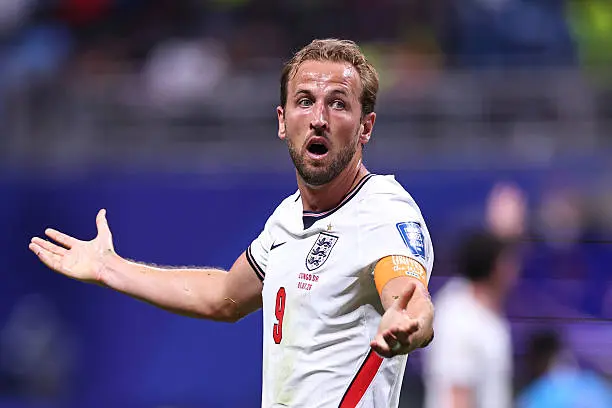
Thomas Tuchel, known for his analytical and structured coaching style, has allegedly taken a calm but firm approach in addressing the matter. According to sources close to the England camp, Tuchel emphasized that the issue is not about individual mistakes but about collective alignment under pressure. His internal message reportedly stressed that “small misreadings at this level can shift the entire rhythm of a match,” reflecting his focus on systemic correction rather than public confrontation.
A so-called “secret revealed” from within the team environment has added further intrigue to the situation. According to individuals familiar with internal discussions, England had already identified potential structural risks in their attacking transitions before the DR Congo match. One insider claimed that adjustments were tested in training but were not fully stabilized during competitive play, leading to inconsistencies that became visible during the fixture. This revelation has intensified scrutiny over preparation methods.
DR Congo players, meanwhile, reportedly expressed surprise at England’s fluctuating rhythm during key phases of the match. While no formal accusations or disputes have been made, their observations contributed to post-match analysis within England’s technical staff. One anonymous team source noted that “they felt England shifted tempo unpredictably, which created both opportunities and confusion on both sides,” highlighting the tactical complexity of the encounter.
Within the England camp, discussions have remained internal but reportedly intense. Coaching staff are said to be reviewing video analysis sessions focusing on positional spacing, pressing triggers, and Kane’s involvement in deeper build-up phases. The goal, according to insiders, is to ensure that leadership roles on the pitch remain clear under high-pressure scenarios, especially when facing compact and physically aggressive opposition.
Harry Kane is believed to have responded to the situation with a composed and professional attitude. According to reports from within the squad, he addressed teammates in a brief but firm manner, emphasizing unity and accountability. While his exact words were not publicly disclosed, sources claim he reinforced the importance of collective responsibility, stating that performance fluctuations are part of tournament football and must be addressed together rather than individually.
The tactical dimension of the issue has drawn significant attention from analysts, who note that England’s evolving system under Tuchel relies heavily on fluid transitions and multi-role attacking responsibilities. Kane’s adaptation to these demands is considered crucial, as he often functions both as a primary finisher and a link-up facilitator. This dual role, while effective in many scenarios, can also create structural ambiguity if timing and positioning are not perfectly aligned.
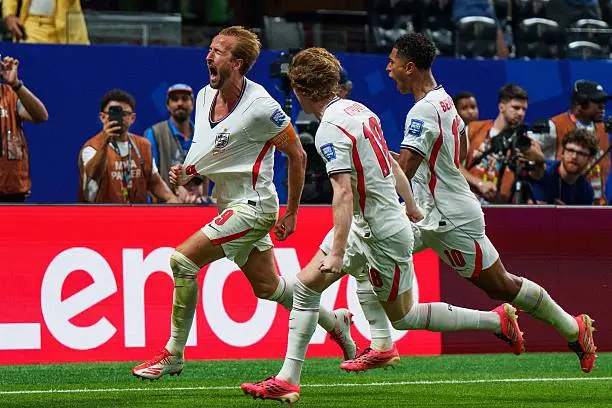
Media reaction has been swift and divided, with some outlets framing the situation as a “hidden crisis” while others describe it as routine post-match analysis exaggerated by external speculation. The phrase “biggest concern” has circulated widely online, although insiders insist that internal assessments remain controlled and focused. Nevertheless, the presence of Kane at the center of the narrative has ensured sustained public interest.
Football analysts have pointed out that England’s performance against DR Congo reflected both strengths and vulnerabilities typical of high-stakes knockout football. While the team demonstrated resilience and individual quality, there were moments where coordination gaps became visible, particularly in transitional phases. Experts argue that such issues are not uncommon at elite level but become magnified when leadership figures are heavily involved.
Inside the dressing room, the atmosphere is described as focused rather than tense. Players reportedly acknowledge that fine margins often decide international matches, and that the current discussion is part of normal elite performance refinement. Senior members of the squad are said to support Kane, viewing him as central to the team’s identity and not as a source of concern.
Fan reaction, however, has been far more emotional, with social media platforms filled with speculation about internal disagreements and tactical confusion. While many supporters continue to back Kane and Tuchel, others have questioned whether England’s system places too much responsibility on a single player during critical phases of play. This divergence of opinion has amplified the narrative beyond the pitch.
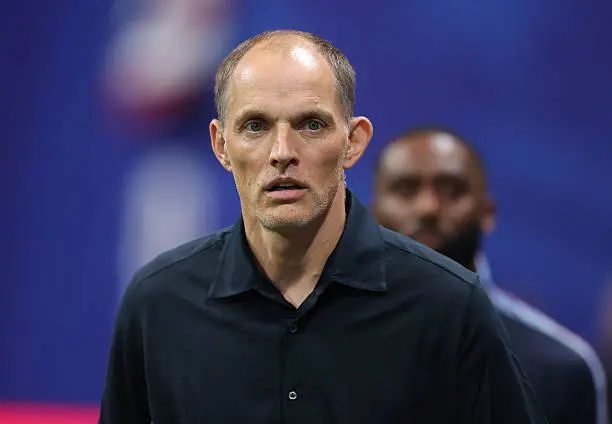
Tuchel’s coaching staff is now reportedly preparing targeted adjustments ahead of upcoming fixtures, focusing on improving communication efficiency between midfield and attack. Training sessions are expected to include scenario-based drills designed to replicate high-pressure transitions, ensuring that decision-making remains consistent even under intense opposition pressing. The coaching philosophy remains rooted in structure, clarity, and adaptability.
Psychological preparation has also become part of the discussion, with staff emphasizing the importance of mental resilience in maintaining performance stability. Kane’s leadership role extends beyond scoring responsibilities, and analysts suggest that his influence in maintaining team composure is just as important as his technical output. Managing this balance is now a key focus for the coaching team.
Looking ahead, England’s upcoming matches will serve as a critical test of whether the internal adjustments can be successfully implemented. While no structural overhaul is expected, incremental refinements are likely to determine how effectively the team responds to similar high-pressure scenarios. Kane’s role will continue to be central, both tactically and psychologically.
In conclusion, what began as a competitive victory over DR Congo has evolved into a deeper internal review for England, centered around communication, tactical alignment, and leadership dynamics. With Harry Kane at the heart of the narrative and Thomas Tuchel guiding the response, the situation highlights the fine balance between success and scrutiny at the highest level of international football.